


AI Legal Assistant
Services:
- Product discovery
- UX/UI design
- Full-stack development
- AI engineering
- Data pipeline & deployment
Industry:
- Human rights · Legal tech · Non-profit
Technology:
- Angular 21
- NestJS / TypeScript
- MariaDB
- OpenAI
- LangChain
- Google Sign-In
- Google Sheets API
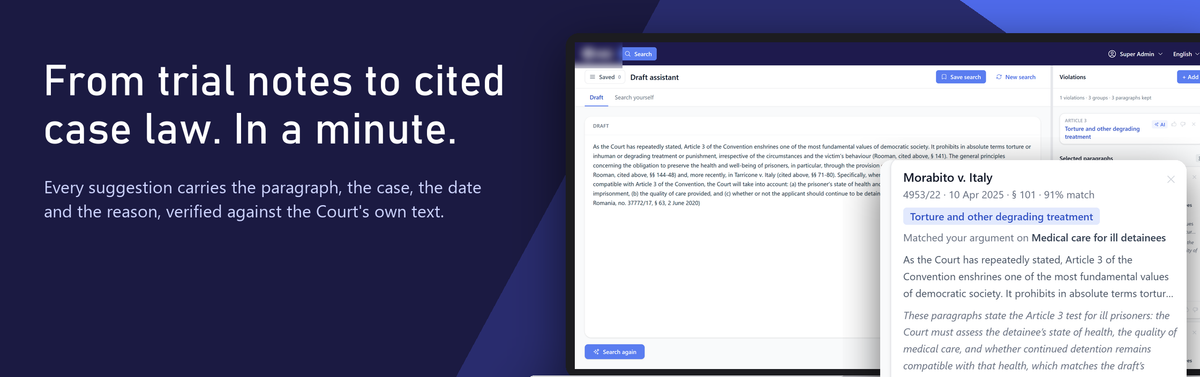
You leave the courtroom with three pages of notes and a report due tomorrow. Somewhere in 27,000 paragraphs of European Court of Human Rights case law is the sentence that turns what you saw into an allegation a judge will take seriously. You paste your notes. About a minute later the assistant names the violations they point to and hands you the paragraphs to cite, each one verified word for word against the Court’s own database.
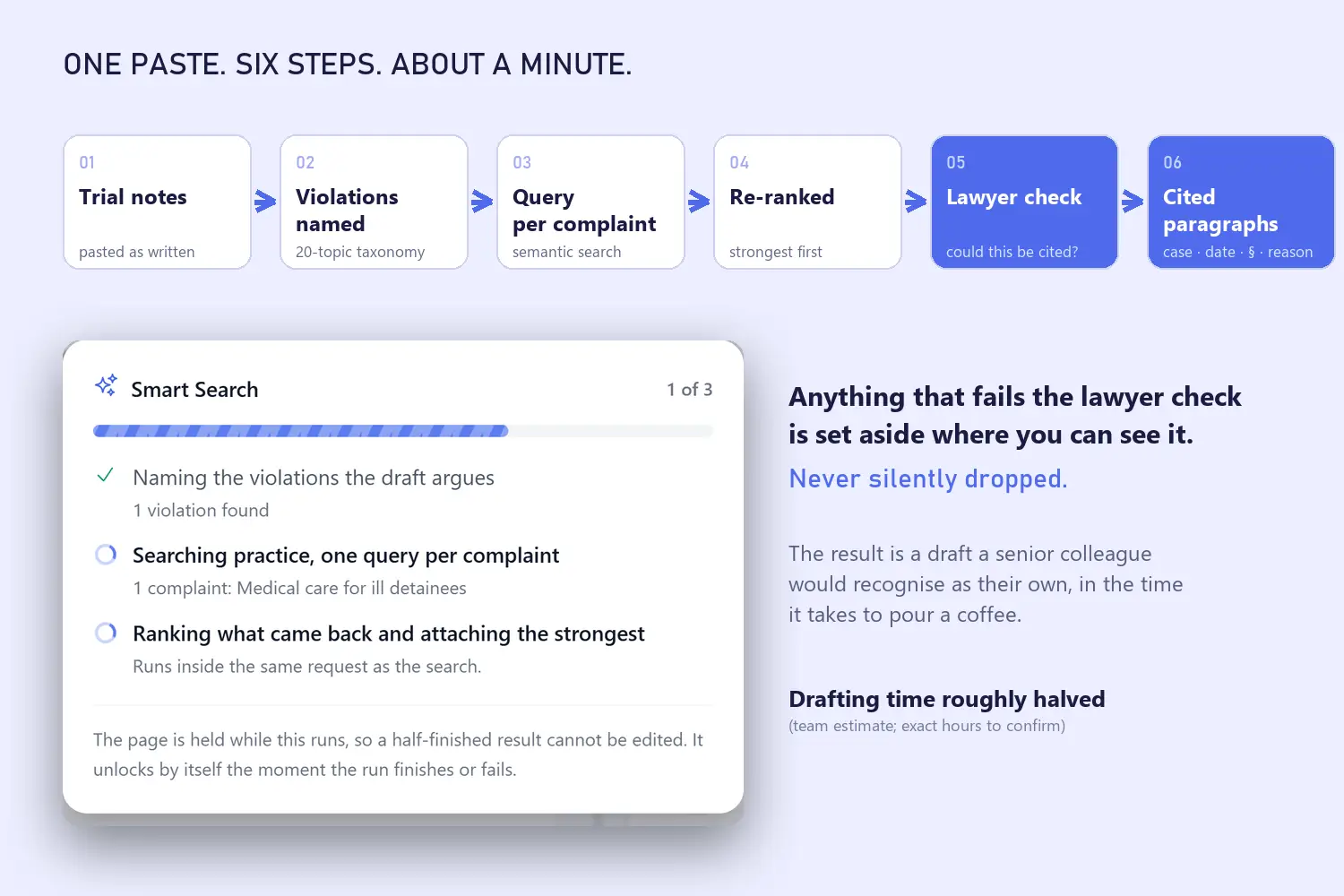
One paste, about a minute, and nothing invented. The assistant reads your notes the way your lawyers would. It names the violations under the organization’s own 20-topic taxonomy, splits the text into separate complaints, searches each one semantically and re-ranks what comes back. Then it asks the only question that matters: could a lawyer honestly cite this paragraph for this complaint? Anything that fails is set aside where you can see it, never silently dropped. Each suggestion arrives with the full paragraph, the case, the date and a one-line reason in your language. The team estimates report drafting time has roughly halved.
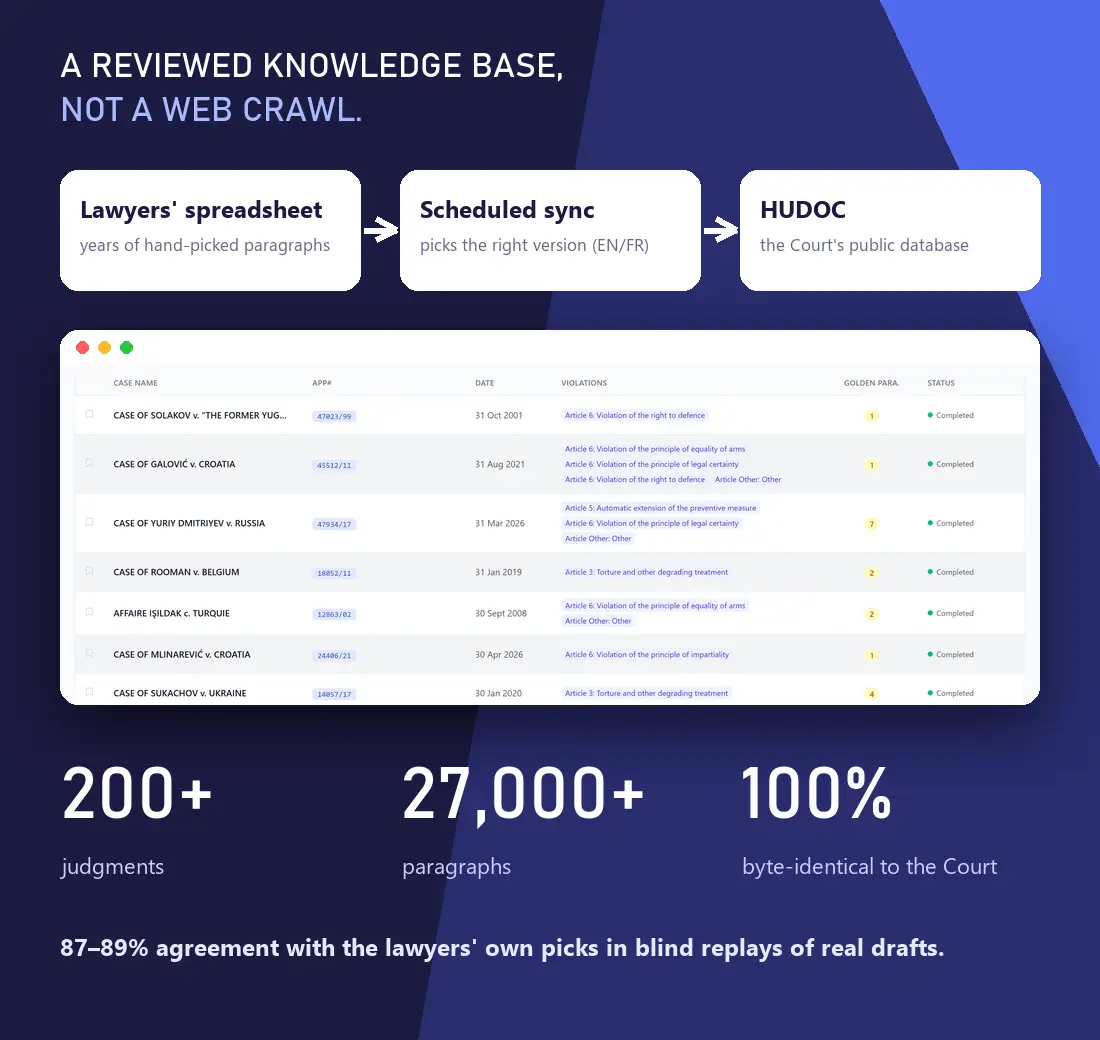
A reviewed knowledge base, not a web crawl. The senior lawyers‘ spreadsheet became the ground truth. A scheduled sync reads their reviewed labels, fetches each judgment from HUDOC, picks the right version when one application number has several (Chamber, Grand Chamber, English and French originals) and stores exactly the paragraphs they cited. The corpus holds 200+ judgments and 27,000+ paragraphs, and every cited paragraph is byte-identical to the Court’s published text. In blind replays of real drafts the assistant agreed with the lawyers‘ own picks 87–89% of the time.
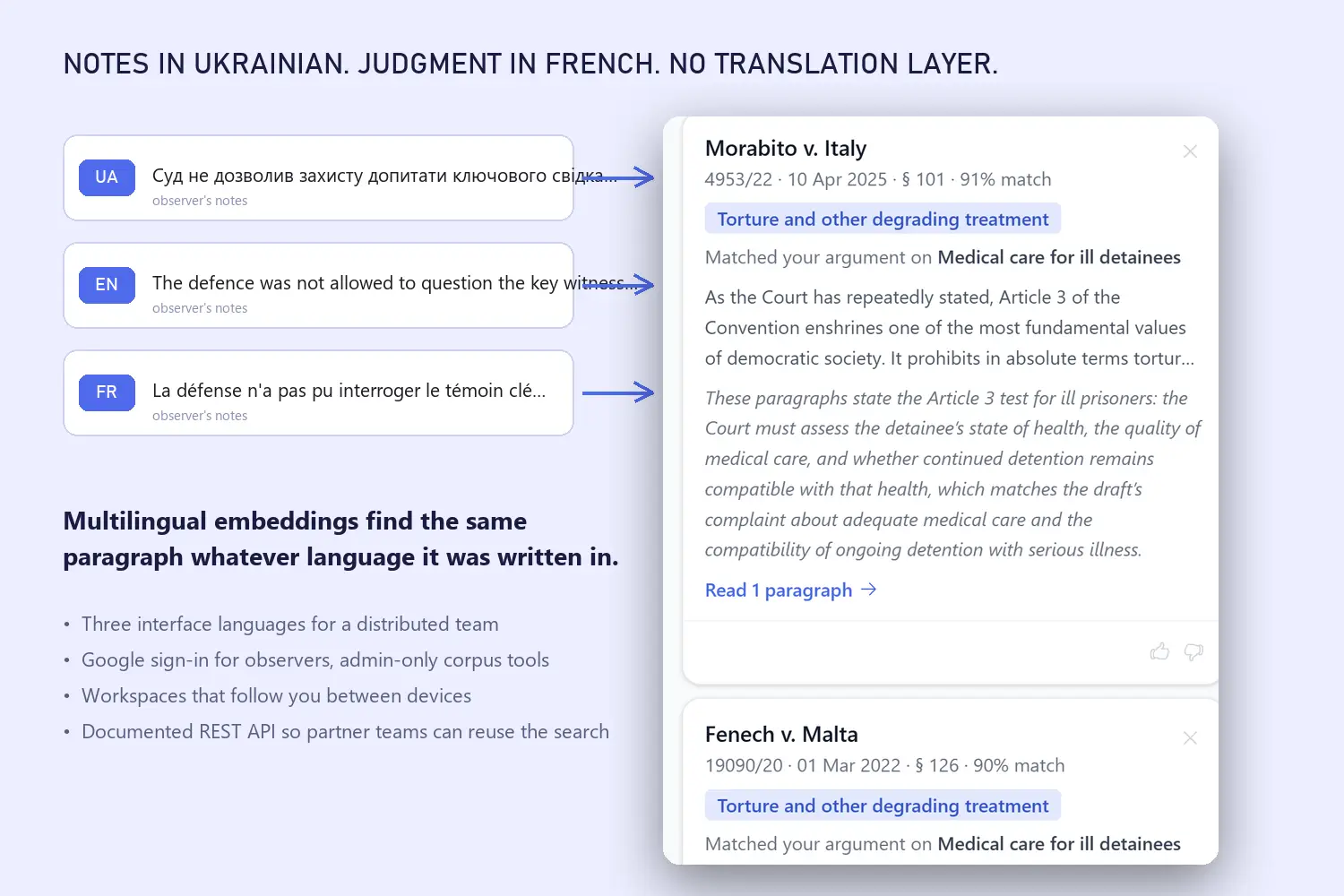
Any language in, the right judgment out. Observers write in Ukrainian; the Court writes in English and French. Multilingual embeddings find the same paragraph whatever language it was written in, so there is no translation step to introduce errors. Three interface languages, Google sign-in for observers, admin-only access to the corpus and taxonomy tools, workspaces that follow you between devices, and a documented REST API so partner teams can plug the same search into their own agents.
If this sounds like your team: expert knowledge a few people carry in their heads or their spreadsheets, and everyone else waits for them. We turn it into a tool the whole team can trust.
Lass uns anfangen!

